
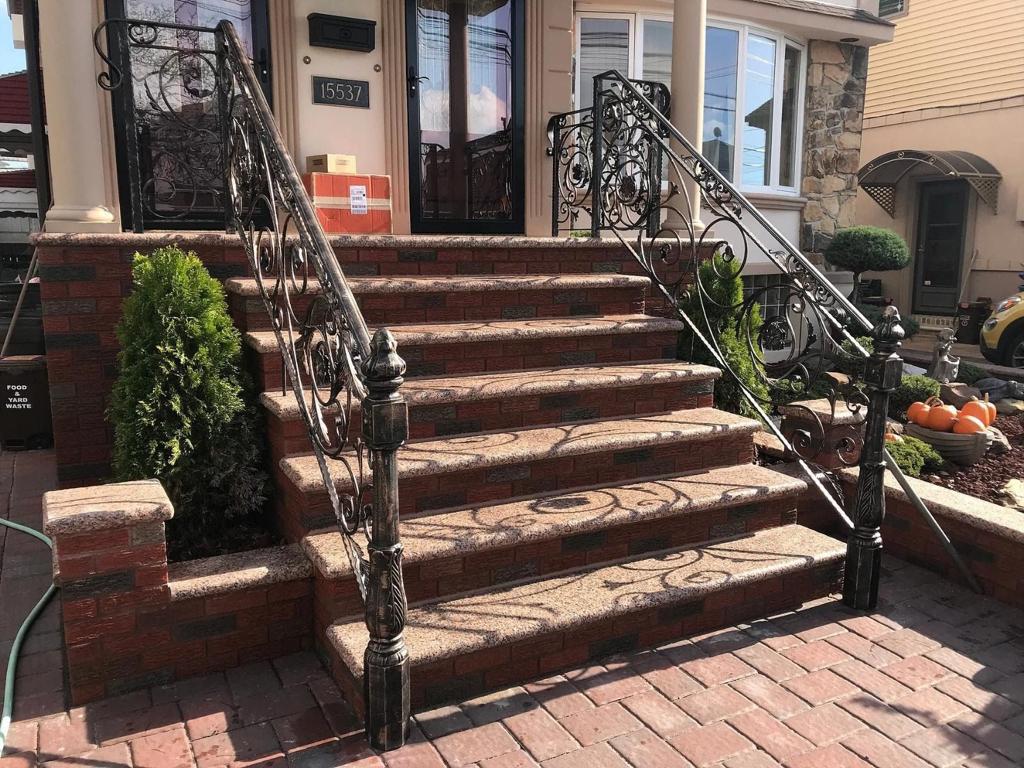
If you’ve ever walked into a home and immediately noticed the staircase, chances are it had a wrought iron stair railing. There’s something about hand-forged iron that commands attention — it’s bold, timeless, and carries a craftsmanship that factory-made materials simply can’t replicate. Whether you’re renovating a historic home, building a new construction, or simply upgrading a dated wooden banister, wrought iron is one of those choices you never regret.
In this post, I want to walk you through everything I’ve learned about wrought iron railings — what makes them special, how to choose the right style, and why working with a skilled craftsman (like the team at Arvern Iron Works) makes all the difference.
What Is Wrought Iron, and Why Does It Matter?
Wrought iron is a form of iron that has been worked and shaped by hand — either hammered, bent, twisted, or forged — rather than cast in a mold. The word “wrought” literally means “worked,” and that heritage is exactly what gives it its appeal.
Unlike cast iron, which is brittle and prone to cracking, wrought iron is highly malleable and ductile. It can be bent into elegant curves, twisted into decorative spirals, or hammered into sharp geometric forms. This flexibility makes it ideal for custom stair railings where every inch of design is intentional.
Beyond aesthetics, wrought iron is incredibly durable. Properly finished, it resists corrosion, stands up to daily wear, and — unlike wood — won’t rot, warp, or splinter over time. It’s the kind of material that lasts not just decades, but generations.
The Components of a Wrought Iron Stair Railing
Before you start shopping or planning, it helps to understand the anatomy of a railing system. There are three main components:
1. The Handrail
The wrought iron stair handrail is the horizontal or angled bar you grip as you walk up and down the stairs. It should be smooth to the touch, sturdy enough to bear weight, and positioned at a comfortable height (typically 34–38 inches from the stair nosing, per US building codes).
Wrought iron handrails can be left as bare metal with a smooth finish, wrapped in a wood cap for warmth, or given an ornate profile for a more decorative look. The choice usually depends on the overall style of your home.
2. The Balusters (Spindles)
Iron stair balusters are the vertical posts that run between the handrail and the bottom rail or floor. They serve both a structural and decorative purpose — keeping the railing solid while defining its visual style.
This is where handcrafted ironwork truly shines. Balusters can be:
- Straight and simple — clean lines for a modern or industrial look
- Twisted — a classic spiral that catches light beautifully
- Basket-weave or scroll — ornate designs suited for traditional or Victorian homes
- Geometric and angular — perfect for contemporary homes with strong architectural lines
Most railings use two to three balusters per stair tread, spaced no more than 4 inches apart (a code requirement to prevent children from slipping through).
3. The Newel Posts
These are the large anchor posts at the top, bottom, and any landing of your staircase. Newel posts bear the most structural load and are usually the most elaborate piece of the design — wider, taller, and more decorative than the balusters.
Styles of Wrought Iron Stair Railings
One of the best things about choosing wrought iron is the sheer variety of styles available. Here’s a quick breakdown of the most popular directions:
Traditional & Classic
Think scrollwork, acanthus leaves, basket motifs, and flowing curves. This style pairs beautifully with brick homes, Craftsman bungalows, colonial architecture, and any space that leans into Old World charm. If your home has dark hardwood floors and crown molding, a traditional iron railing is a natural fit.
Modern Iron Stair Railing
Modern iron stair railing designs strip away the ornamentation and focus on geometry and clean lines. Flat bars, cable-style balusters, minimalist profiles, and matte black finishes are hallmarks of the contemporary look. These railings work especially well in open-concept homes, lofts, and new builds with high ceilings and large windows.
Transitional
Can’t decide between traditional and modern? Transitional designs blend both — simple balusters with subtle details, restrained curves without heavy scrollwork. They’re the most versatile option and work in a wide range of home styles.
Rustic & Farmhouse
Hammered textures, oil-rubbed finishes, and hand-forged imperfections give rustic iron railings a raw, artisanal feel. These pair wonderfully with reclaimed wood, exposed brick, and farmhouse-style interiors.
Why Handcrafted Beats Mass-Produced Every Time
Walk into any big box home improvement store and you’ll find iron railing kits. They’re affordable, standardized, and easy to install. But here’s the thing — they look exactly like every other railing kit out there.
When you work with a craftsman like Arvern Iron Works, you get something entirely different. Every piece is made to your specifications — your stair dimensions, your aesthetic preferences, your home’s character. The ironwork is forged by hand, which means subtle texture variations, precise proportions, and a level of detail that mass production simply cannot achieve.
There’s also the practical side of customization. Not all staircases are standard. Curved stairs, spiral layouts, landings at odd angles, unusual tread depths — a custom fabricator can handle all of it. With a kit, you’re forcing your staircase to fit the product. With a craftsman, the product fits your staircase.
Choosing a Finish: Black, Bronze, or Something Else?
The finish on your wrought iron stair railing affects both its appearance and its longevity. Here are the most common options:
- Matte Black — The most popular finish by far. Timeless, versatile, and easy to maintain. Works with almost any interior color palette.
- Gloss Black — Similar to matte but with a shinier, more formal appearance. Great in traditional or elegant settings.
- Oil-Rubbed Bronze — Warm, dark brown tones with subtle highlights. Pairs beautifully with warm wood tones and traditional décor.
- Antique / Patina Finish — A hand-applied finish that mimics age and wear, giving the iron a historical, lived-in look.
- Powder Coat Colors — For those who want something beyond black, powder coating can produce virtually any color — navy, forest green, deep burgundy, and more.
Whatever finish you choose, make sure the ironwork is properly primed and sealed before finishing. This is essential for preventing rust, especially in humid climates or near exterior openings.
Indoor vs. Outdoor Wrought Iron Railings
Wrought iron works beautifully both inside and outside the home, but the two applications have different requirements.
Indoor railings face less exposure to moisture, so finishing requirements are slightly less stringent. That said, proper priming is still important — especially in bathrooms, kitchens, or basements where humidity can be high.
Outdoor railings — on porches, front stoops, exterior stairs, or decks — need more aggressive rust protection. Hot-dip galvanizing, epoxy primers, and high-quality exterior powder coats are all good options. Arvern Iron Works works with homeowners across the US to specify the right finish for their local climate, whether that’s the dry heat of the Southwest or the salt air of a coastal region.
What to Expect During Installation
Installing a wrought iron stair railing is not a typical DIY project — and that’s okay. The precision required for a safe, code-compliant installation is best left to professionals.
Here’s a general overview of the process:
- Measurement & Design — A fabricator will measure your staircase and work with you on the design. Many shops, including Arvern Iron Works, offer 3D renderings so you can visualize the final product before fabrication begins.
- Fabrication — Pieces are forged and welded by hand. Depending on the complexity of the design, this can take anywhere from a few days to several weeks.
- Finishing — After fabrication, each piece is cleaned, primed, and finished according to your specifications.
- Installation — The installer will core-drill or anchor newel posts into the floor and/or stair stringers, secure balusters, and attach the handrail. The result should be completely solid with no flex or movement.
- Touch-up — Any scratches or marks from installation are touched up with matching paint or finish.
How Much Does a Wrought Iron Stair Railing Cost?
This is the question everyone wants answered, and the honest answer is: it depends.
For a standard straight staircase with simple balusters, you might spend anywhere from $150 to $300 per linear foot for custom work, including materials and installation. A typical home staircase might run 10–15 linear feet, putting the total in the range of $1,500–$4,500.
For elaborate custom designs — heavy scrollwork, intricate balusters, large newel posts — costs can go higher. Outdoor railings with additional rust protection also tend to cost more.
That said, wrought iron is a long-term investment. Unlike wood railings that may need refinishing every few years, or vinyl that can yellow and crack, a well-built iron railing can last the lifetime of your home with minimal maintenance.
Maintenance Tips for Wrought Iron Railings
Keeping your wrought iron stair railing looking sharp doesn’t take much:
- Dust regularly — A dry or lightly damp cloth removes everyday dust and fingerprints.
- Check for rust spots — Especially on outdoor railings. Catch rust early, sand it back, and touch up with matching primer and paint.
- Wax occasionally — A thin coat of paste wax or car wax adds a layer of protection and keeps the finish looking fresh.
- Avoid harsh cleaners — Bleach and acidic cleaners can break down protective coatings. Stick to mild soap and water.
With proper care, your wrought iron railing will look just as good in 20 years as it does the day it’s installed.
Ready to Transform Your Staircase? Let Arvern Iron Works Bring Your Vision to Life
A wrought iron stair railing is more than a safety feature — it’s a statement about the quality and character of your home. The combination of durability, design flexibility, and lasting beauty makes it one of the best investments you can make in your staircase.
If you’re ready to upgrade your stairs with handcrafted ironwork built to last, Arvern Iron Works is here to help. From classic scrollwork balusters to sleek modern iron railings, their team works with you from design to installation — custom-built for your home, your style, and your budget.
Get a Free Quote at Arvern Iron Works — and take the first step toward a staircase that truly stands out.